Da Pietro
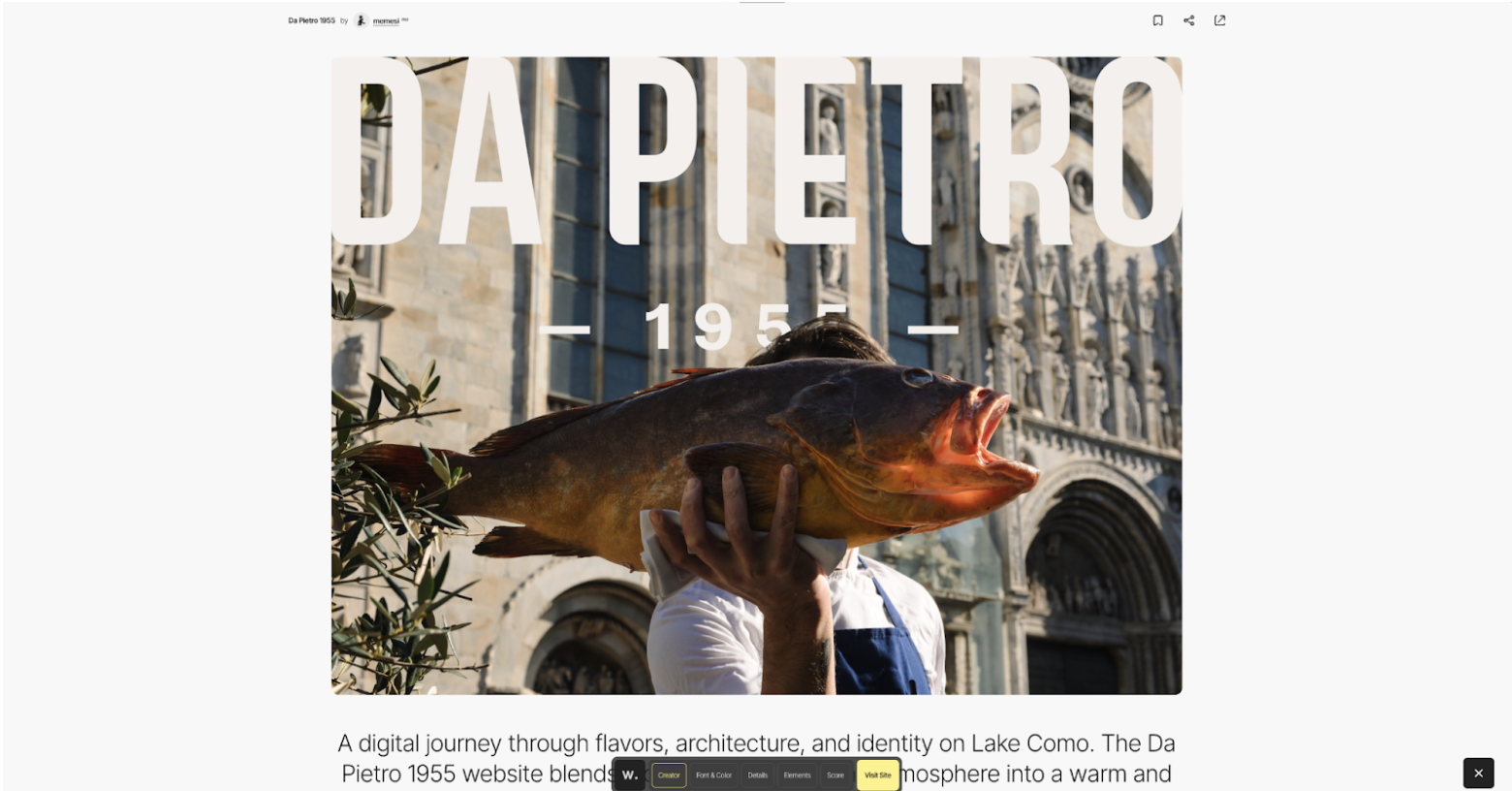
For me, this restaurant design effectively conveys that freshly prepared food is the central message the restaurant wants its consumers to understand. When scrolling through the website, this message is proven, as when looking at their menu, you will notice most of their food options are seafood. The design immediately invites you to Como, a city in Italy, making you feel truly transported there. Using Gestalt principles, the first element that makes this design dynamic is the figure/ground relationship, where the eye perceives the person with the fish in the foreground. However, the restaurant name “Da Pietro” and “1955” intentionally share the foreground with this figure, while the Italy photograph serves as the background element. The principle of similarity is also at work here, as the consistent typography and warm color palette throughout the design create visual cohesion and reinforce the authentic Italian dining experience. The bolded text across the header guides your eyes to move fluidly down to the footer. I adore this design; even though it’s extremely simple, it’s extremely effective. While I don’t have immediate thoughts on how to elevate the design, I think this would have been perfect for a three-part series featuring a meat design and perhaps a dessert design. Ultimately, Da Pietro’s design demonstrates that powerful visual communication doesn’t require complexity for an amazing design.
Anima
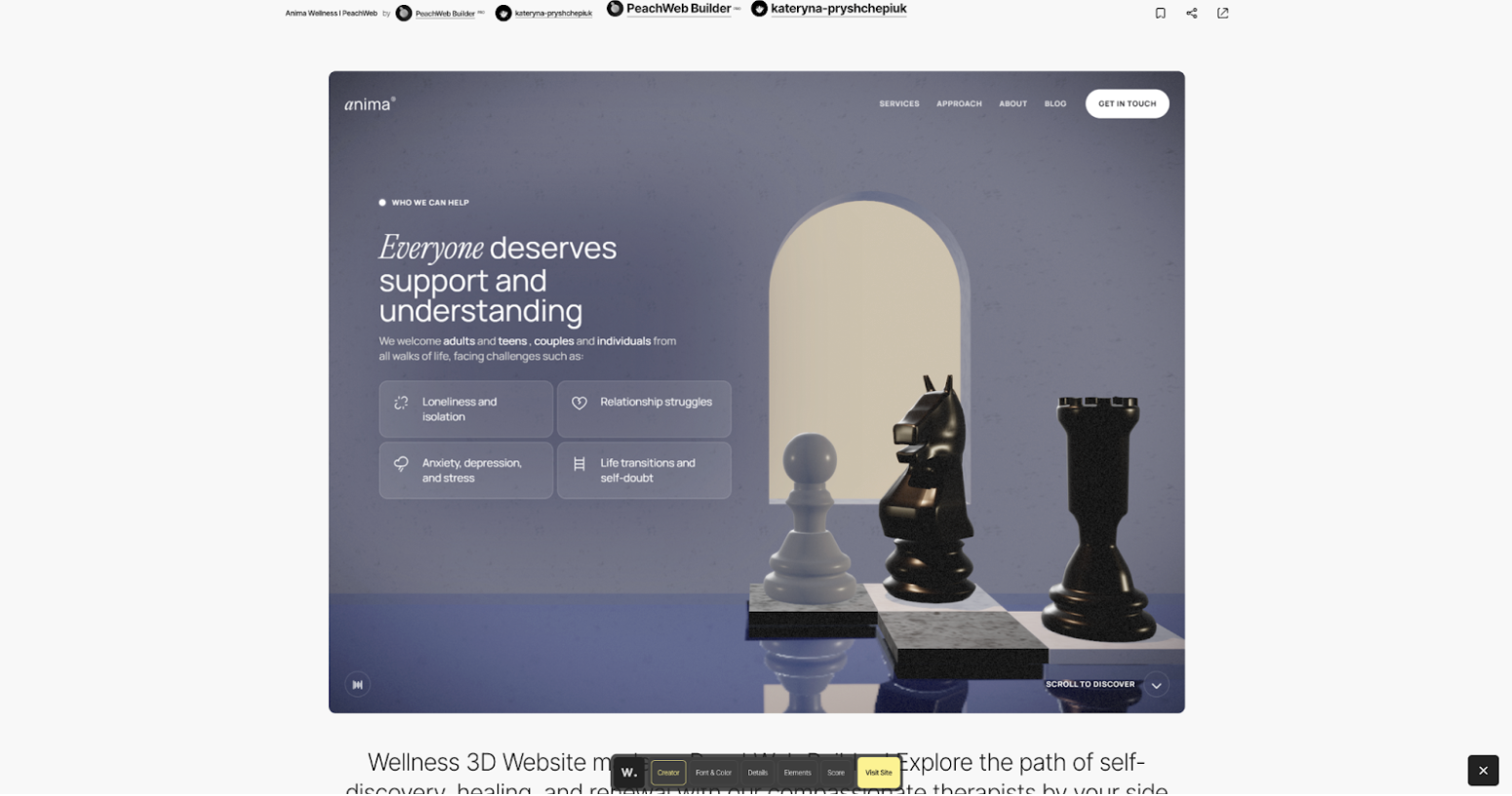
When looking at this design, I found it interesting that while I thought the message was clear, my partner’s first impression was that the image didn’t make sense for the website’s message. My initial reaction when seeing the chess pieces against the blue background was that it would be chess-related, and I was pleased to discover it was, but not in a traditional sense. The text on the left explains that this is a mental health resource site. Chess’s objective is to strategically move pieces on the board to achieve the ultimate goal of checkmate, much like navigating life’s challenges. In this game of life that is often compared to chess, the challenge is figuring out each problem step by step until you reach your version of your breakthrough or resolution (checkmate). This page does an excellent job of showcasing Gestalt principles. The design demonstrates deliberate use of proximity by placing the image and text on the left side to emphasize that both concepts connect to one another while maintaining their own importance. Within that use of proximity, I noticed another application on the left side of the page, where the call to action is positioned directly next to the tabs for different types of help. These four help tabs create symmetry and are more visually appealing. Personally, I liked the design because it provided an “aha moment” once I connected the pieces; however, this might not be the case for some or most people. If I could change one element of the design, it would be to use a different image that more clearly conveys the message. Overall, this design works in creating a thoughtful metaphor for mental health support, even if the connection isn’t immediately obvious to all viewers.